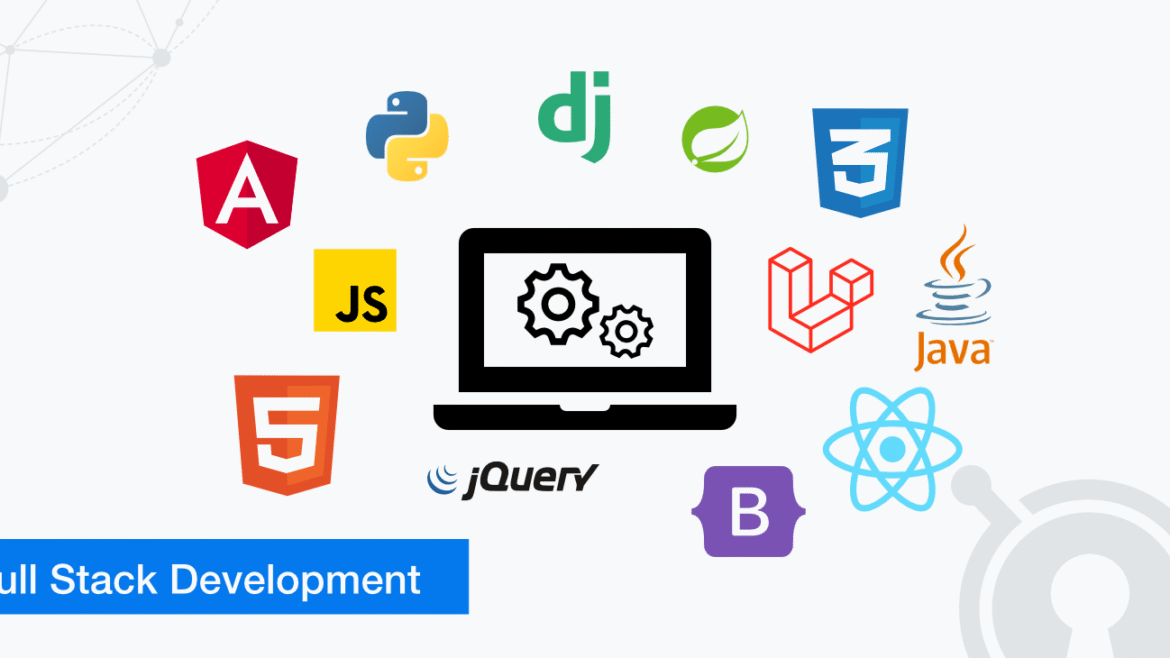
Full Stack Development combines frontend and backend development, allowing developers to build complete web applications from start to finish. A full stack developer handles everything a website needs to function, including the user interface, server logic, database management, and deployment.
Full stack development is highly versatile, in-demand, and ideal for those who want to design, develop, and maintain entire applications independently or as part of a team.
Key skills of a full stack developer include:
-
Frontend Development: HTML, CSS, JavaScript, React, Vue, Angular
-
Backend Development: Node.js, Express, Django, Laravel, Spring Boot
-
Databases: MySQL, PostgreSQL, MongoDB
-
APIs & Integrations: REST, GraphQL
-
Version Control & Deployment: Git, GitHub, CI/CD, Cloud hosting (AWS, Vercel, Netlify)
Roadmap to Becoming a Full Stack Developer
1. Frontend Development
Start with the visual side of web apps:
-
HTML (structure)
-
CSS (design & layout, Flexbox, Grid)
-
JavaScript (interactivity, DOM manipulation)
-
Responsive Design & Cross-Browser Compatibility
-
Frameworks: React.js (most popular), Vue.js, or Angular
Projects: Portfolio website, landing page, interactive form, simple blog.
2. Backend Development
Learn server-side programming and databases:
-
Choose a backend language: Node.js (JavaScript), Python (Django/Flask), PHP (Laravel), or Java (Spring Boot)
-
REST API and GraphQL
-
Authentication & Authorization (JWT, OAuth, sessions)
-
Databases: SQL (MySQL, PostgreSQL) and NoSQL (MongoDB)
Projects: CRUD application, authentication system, blogging platform.
3. Integration & Full Stack Practices
Connect frontend & backend:
-
API integration (fetch, axios)
-
State management (Redux, Context API)
-
Error handling & validation
-
Form submission & database interaction
Projects: E-commerce app, social media app, task manager.
4. Version Control & Collaboration
Work efficiently in teams:
-
Git basics (clone, commit, push, pull)
-
Branching & merging
-
Collaboration on GitHub / GitLab
-
Pull requests & code reviews
Project: Contribute to an open-source project or team app.
5. Advanced Full Stack Skills
Build professional-grade apps:
-
Serverless architecture (AWS Lambda, Firebase)
-
Real-time apps (WebSockets, Socket.io)
-
Cloud deployment (AWS, Vercel, Netlify, Heroku)
-
Testing: Unit tests, integration tests (Jest, Mocha, Cypress)
-
Performance optimization & caching (Redis, CDN)
Projects: Chat app, online marketplace, booking system.
6. Deployment & DevOps Basics
Make your applications live:
-
Hosting & domain setup
-
CI/CD pipelines (GitHub Actions, Jenkins)
-
Docker basics (containers for development & production)
-
Monitoring & logging (PM2, CloudWatch, LogRocket)
Project: Deploy a full-stack web app accessible on the internet.
7. Portfolio & Real-World Experience
Showcase your skills to employers or clients:
-
Build a capstone project integrating frontend, backend, and database
-
Document projects on GitHub
-
Create a professional portfolio website
-
Freelance or contribute to open-source projects
Career Outcomes
With full stack development skills, you can work as:
-
Full Stack Web Developer
-
Frontend or Backend Developer
-
React / Node.js Developer
-
Web Application Developer
-
Freelance Developer / Startup CTO
Full stack developers are highly versatile, able to handle both user experience and server logic, making them essential in startups and tech companies worldwide.